Experience Report Strategic Initiative ETEO
Mar 07, 2016Jul 06, 2026
About six years ago, the management of Saxonia Systems AG set out on a new path to define and implement strategic goals. Similar to the principles of Scrum, a backlog of strategic initiatives was created, prioritized, estimated, and implemented in four-month sprints. A stand-up every two weeks gave all employees the opportunity to find out who was working on which initiatives. At the same time, employees were able to take part in planning and execution. In this blog post, I would like to report from my own experience how the ETEO initiative developed and what we were able to achieve with it. At the last stand-up, the initiative came to an end and today we can present remarkable results.
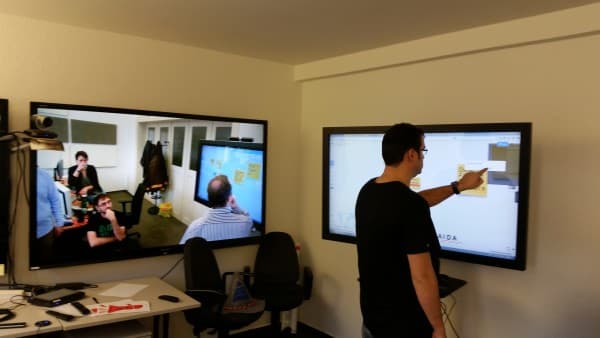
Distributed collaboration across six locations and customers throughout Germany is a reality at Saxonia Systems AG. Agile software development is leading to newer forms of collaboration that require more communication and coordination. We started early on to experiment with video conferencing systems and developed the eteoBoard in order to experience a real Daily even in a distributed setup. We sensed that the experience within the teams was lying dormant, but also that while we were technically proficient, we had not yet sufficiently examined the social aspect. Because distributed collaboration is always also a question of trust and team spirit. So at the beginning of last year, we decided to propose a strategic initiative dedicated to a holistic concept for agile and distributed software development.
Saxonia strategy stand-up
What was to be achieved?
The goal of the strategic initiative ETEO was to further develop the previous concept for distributed and agile software development ETEO (One Team One Office) into a robust and integrated concept. Ultimately, it was intended to serve the purpose of building documentation and expertise in order to actively support existing and future distributed teams before and during the project.
The agreed target state included the collection and processing of previous experiences in the distributed teams, the description of best practices for the project environment and the tools used, as well as the development of a model or procedure for the optimal support of distributed and agile projects. Finally, the aim was, with the help of an external expert, to supplement the social component with appropriate concepts and methods and to expand our expertise in this regard. These goals were to be achieved within three sprints (1 year).
How did we work?
The sprint length gave us a framework within which we defined our goals. For example, we wanted to develop a workshop concept or try out specific things in our teams. To this end, we divided the work into individual work packages and managed them in a task management system. We used a wiki to store our results, which everyone could access at any time.
Working on a strategic initiative cannot be done full-time due to each employee’s operational responsibilities. The number of contributors also fluctuates occasionally. The people who contributed were
- Alfred Mönch as division manager,
- Frank Sievert as an experienced project manager and agile coach,
- Stefanie Albrecht from Sales & Business Development,
- Kay Grebenstein from quality assurance,
- Erik Bens as an experienced Product Owner,
- Juliane Kluge as an external coach,
- Clemens Hahn as a psychology student,
- and myself as a developer and architect who had worked for a longer period in a distributed Scrum team.
One challenge in particular was getting everyone to the same table. At times, we ourselves showed the symptoms of a dysfunctional distributed team. Occasionally we pursued different goals, did not communicate sufficiently, and sometimes needed a lot of time to get back on the same page.
We were able to establish a regular meeting on Monday mornings, which from my later perspective was very important. Similar to a stand-up, we could synchronize here and discuss the next steps. Focused workshops lasting from 1–2 hours up to a full day were also very helpful for implementing specific work packages together. Many of the contents only emerged thanks to the group intelligence and the different roles of the team members in the company.
Brainstorming at the SI ETEO
First, it was important for us to collect and systematize the existing experience. We identified the four pillars of successful distributed collaboration: project space, tools, organization, and team, and examined these in structured interviews. We collected the key statements and formulated hypotheses about how each problem could be solved. Building on this, we developed best practices. During our work, we realized that shared values and value systems have a decisive influence on collaboration and, based on the five Scrum values, we developed a value compass with a further five values for distributed and agile teams. This also served as a guide for us within our initiative.
On the way to the value compass
Our Coaching Toolbox was created with the involvement of our coach and from our experience as Scrum Masters. We collected and developed exercises to improve, for example, team belonging and trust in a distributed team. The workshops we designed as team kick-offs and team boosters are also based on the Coaching Toolbox. In addition, we sought exchange within the community. The positive feedback has always encouraged us to keep working.
What have we achieved and what not?
In one year, we achieved that we
- have gathered and systematized experience from distributed and agile projects,
- have derived best practices regarding the project space, tools, organization, and the team,
- have collected and analyzed customer experiences,
- have developed a process model with artifacts and activities that enables continuous support of distributed and agile projects,
- have developed measures and concepts to support and develop distributed teams,
- have designed and conducted introductory workshops,
- have involved the most important key roles in the company, and
- have tested most elements of the ETEO concept at least once.
ETEO product box – What’s actually inside?
By the end of the last sprint, we had not yet achieved that
- the initiated integration of the ETEO process model into the Saxonia process model is completed, since this is a long-term, cross-company task, and
- an already designed management workshop has been carried out, as so far neither the need nor the opportunity for it has arisen.
What specific results have we achieved and what insights have we gained?
The concrete results are
- extensive documentation on agile and distributed software development which, in addition to the project space and tools, focuses on the development and support of distributed teams,
- artifacts for the pre-project phase, such as checklists, argumentation aids, and information material,
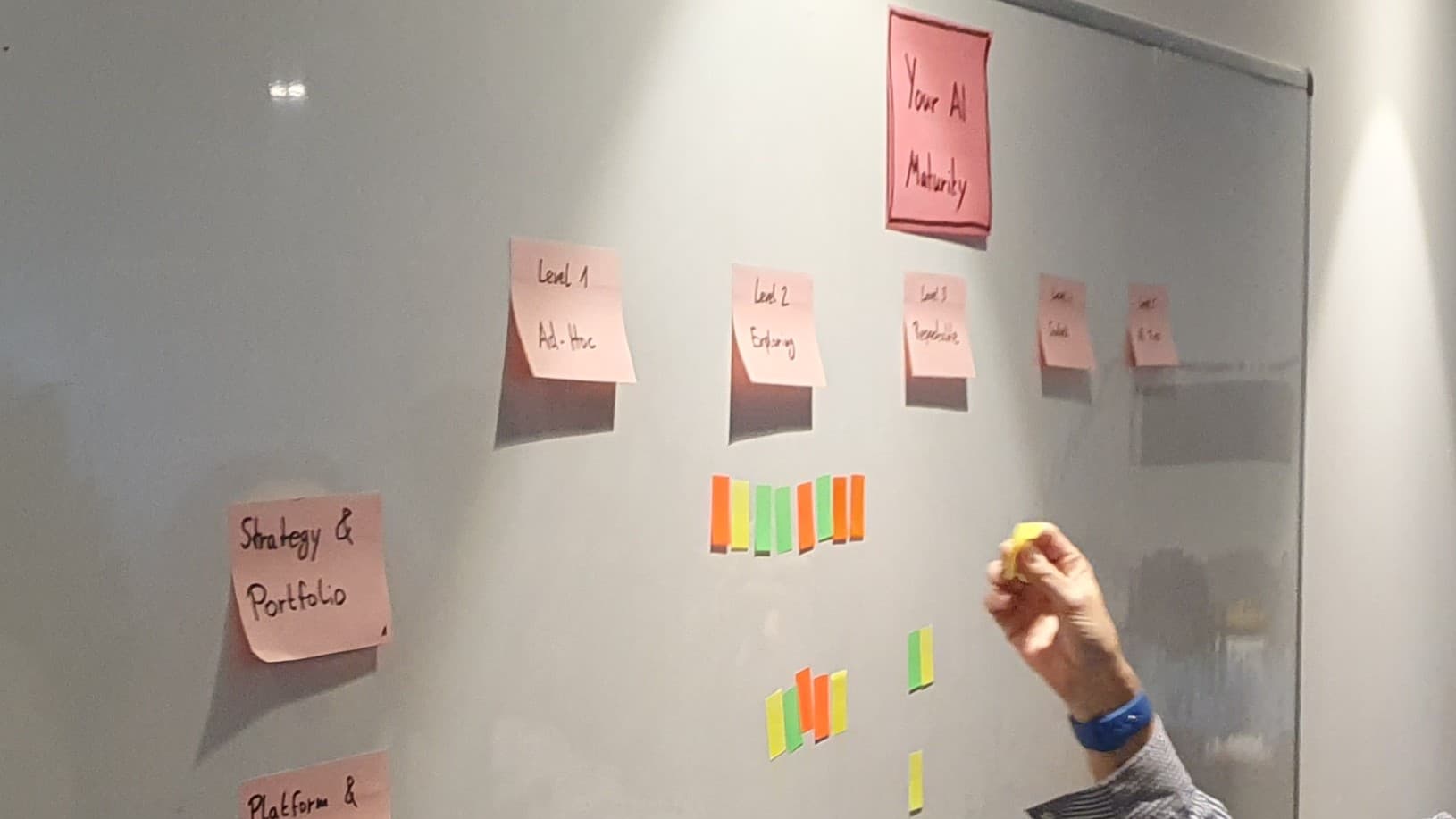
- a maturity model for distributed and agile teams,
- best practices for designing the distributed project space and using digital collaboration tools, and
- an extensive coaching toolbox based on the ETEO values compass, with exercises, e.g., for improving the team spirit of distributed and agile teams.
Distributed Team Booster workshop in one of our teams
The most important findings of the initiative are that
- agility and distribution are possible,
- technology and tools make up only one part of successful collaboration,
- our colleagues often surpass themselves and the team itself, through motivation and expertise, is crucial for the success of a project,
- from the very beginning, the particularities of distributed collaboration must be addressed at all levels of the organization,
- many other companies and the agile community are dealing with the topic of distributed collaboration, and
- the ETEO concept supports the unique selling point of our core business, contributes to the Saxonia Systems brand, and has the potential to become a consulting product.
In numbers, with a team of sometimes a maximum of 8 members we have
- created extensive documentation of over 200 pages (determined by Word export),
- given 8 presentations,
- published 5 articles,
- conducted 5 workshops, and
- prepared 2 book contributions.
Talk at Agile World in Munich
What do we want to do next?
The Strategic Initiative ETEO has come to an end with the last standup. However, the topic of ETEO will be continued as an operational topic. Over the course of the Strategic Initiative ETEO, it became apparent that we have material and expertise that is attracting interest in the market and that we now also want to offer as a product. To this end, we will prepare marketing material and campaigns. Specifically, we are planning to run workshops at our premises to optimally prepare distributed teams from other organizations for distributed teamwork within two days. Similar workshops can also be offered at the customer’s site, as shown, for example, by the workshop successfully conducted for one of our customers in January. In addition, we want to offer individual consulting days or Scrum Master support for agile and distributed teams. Of course, we will also continue to support our internal projects and continue working on integrating the ETEO process model and the Saxonia process model. We will also continue our expertise-driven public outreach.
In conclusion, what remains is the impression of what we were able to achieve in such a short time and with minimal effort. A heartfelt thank you to everyone who contributed to the Strategic Initiative and to all the Saxonia teams who supported us in gathering experience and testing.
%22%2F%3E%0A%20%20%20%20%20%20%3Cstop%20offset%3D%22100%25%22%20stop-color%3D%22hsl(84%2075%25%2022%25)%22%2F%3E%0A%20%20%20%20%3C%2FlinearGradient%3E%0A%20%20%20%20%3CradialGradient%20id%3D%22wash%22%20cx%3D%2250%25%22%20cy%3D%2250%25%22%20r%3D%2250%25%22%3E%0A%20%20%20%20%20%20%3Cstop%20offset%3D%220%25%22%20stop-color%3D%22hsl(218%2075%25%2051%25)%22%20stop-opacity%3D%220.95%22%2F%3E%0A%20%20%20%20%20%20%3Cstop%20offset%3D%22100%25%22%20stop-color%3D%22hsl(218%2075%25%2051%25)%22%20stop-opacity%3D%220%22%2F%3E%0A%20%20%20%20%3C%2FradialGradient%3E%0A%20%20%20%20%3Cpattern%20id%3D%22stripes%22%20width%3D%2236%22%20height%3D%2236%22%20patternUnits%3D%22userSpaceOnUse%22%20patternTransform%3D%22rotate(6)%22%3E%0A%20%20%20%20%20%20%3Cpath%20d%3D%22M%200%2018%20L%2036%2018%22%20stroke%3D%22white%22%20stroke-opacity%3D%220.18%22%20stroke-width%3D%221.8%22%2F%3E%0A%20%20%20%20%3C%2Fpattern%3E%0A%20%20%3C%2Fdefs%3E%0A%0A%20%20%3Crect%20width%3D%221600%22%20height%3D%22900%22%20fill%3D%22url(%23bg)%22%2F%3E%0A%20%20%3Crect%20width%3D%221600%22%20height%3D%22900%22%20fill%3D%22url(%23wash)%22%20opacity%3D%220.28%22%2F%3E%0A%20%20%3Crect%20width%3D%221600%22%20height%3D%22900%22%20fill%3D%22url(%23stripes)%22%2F%3E%0A%0A%20%20%3Cg%20fill%3D%22none%22%20stroke%3D%22white%22%20stroke-opacity%3D%220.10%22%3E%0A%20%20%20%20%3Cpath%20d%3D%22M%200%20661%20C%20260%20495%2C%20570%20827%2C%20840%20661%20S%201300%20495%2C%201600%20661%22%20stroke-width%3D%222%22%2F%3E%0A%20%20%20%20%3Cpath%20d%3D%22M%200%20729%20C%20220%20608%2C%20610%20850%2C%20910%20729%20S%201320%20608%2C%201600%20729%22%20stroke-width%3D%222%22%2F%3E%0A%20%20%3C%2Fg%3E%0A%3C%2Fsvg%3E)